



Olive fruit fly
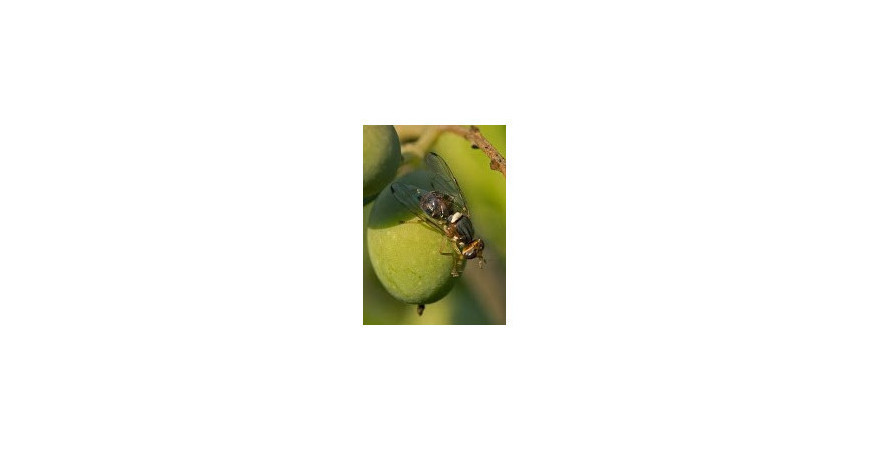
Olive fruit fly (Bactrocera oleae): description and control
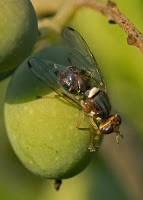
Taxonomy
Diptera, Tephritidae, Bactrocera oleae (formerly Dacus oleae).
Distribution
Mediterranean, South Africa and Central Asia.
Host range
Olive, privet and jasmine. Almost monophagous.
Life cycle
- Two to five generations a year.
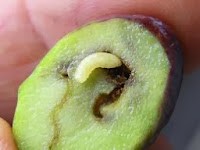
- Only the final generation overwinters as pupae in the soil. Adults emerge in spring. When olives are large enough, females lay eggs in them, making a hole visible to the naked eye. The larva completes its development inside the olive.
- In November, the larva causes the fruit to fall and overwinters in the soil as a pupa. Heat has a strong adverse effect on the fly. In hot areas, populations appear before and after summer.
Population regulation
- The main factor is high temperature, which prevents the fly from flying.
- Cultivation: there are no resistant varieties. Cultivating beneath trees has been recommended to expose pupae to winter cold, although damage to tree roots has been demonstrated.
- Parasitism: Pnigalio mediterraneus and Opius concolor have limited effect because the fly hides and cannot be parasitised.
Damage
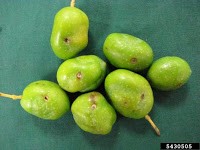
Table olives: fruit loss from punctures. Oil olives: reduced weight and oil quality; attacked olives increase oil acidity.
Sampling
- One monitoring station per 300 ha.
- Primary sampling unit: 20 trees, with two-stage monitoring.
- Secondary sampling unit: depends on the pest in shoots, fruit or leaves. Weekly checks.
- Adults: glass fly traps, 3 per monitoring station per day, with 4% diammonium phosphate attractant; check female fertility. Alternatively, colour/sex-attractant traps, 3 per station per day, using a yellow trap with a male-attracting pheromone dispenser.
- Olives: 200–400 per station for oil olives and 1000 for table olives; record the percentage attacked.
Control
Cultural: early harvesting of table olives helps avoid the pest, which also attacks in autumn. Cultivation to kill pupae has limited effectiveness and damages roots.
Biological: limited effectiveness in the field.
Chemical: adulticides applied as bait or bait strips (aerial strip treatment), generally on the southern side, combining insecticide with hydrolysed protein as a food attractant and sometimes pheromone. The original article lists dimethoate and spinosad (the latter also used in organic farming, supplied with bait, more expensive but less toxic); pyrethrins (organic but not integrated production) and kaolin (organic repellent); and phosmet for larval treatment, stressing compliance with the pre-harvest interval.
The article describes treatments before summer and in autumn, with adults emerging in March–April and puncturing fruit in June.